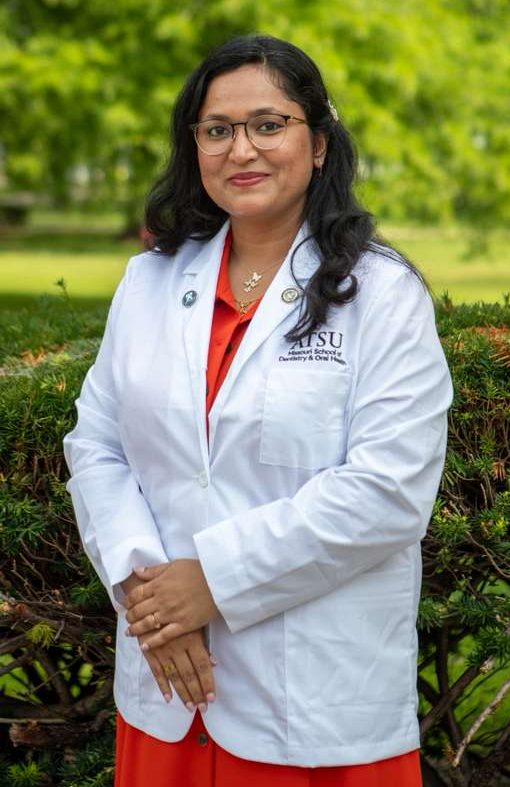
My journey to A.T. Still University – MOSDOH started in 2023. That was the year I first applied to dental schools. During my first cycle, I applied to only four schools because I was still trying to improve my TOEFL score. I didn’t receive any interview calls that year. After that, I emailed all the schools I applied to, asking for feedback on how to strengthen my application. Most schools never responded, but MOSDOH sent me a detailed reply. They took the time to review my application and suggested gaining more volunteer hours and work experience across different areas of dentistry. Their feedback gave me hope to move forward.
I started working as a hygienist in both a private clinic and a community free dental clinic to gain more exposure. I also volunteered at special-needs daycare schools. At the same time, I set up a small bench-prep practice space at home. I bought all my materials from Facebook Marketplace, and even there, I felt God’s hand. I met another foreign-trained dentist who graduated from Michigan, and she became a great source of motivation for me. The uncertainty in this journey is very real, and self-doubt comes often, but the support like this pushed me forward.
I tried to do everything MOSDOH recommended, and I prepared myself for another cycle. In 2024, I decided to give my full effort. I connected with the CAAPID Simplified team, and they gave me so much courage throughout the process. We had Zoom meetings where they showed me the strengths in my application and guided me on how to present them properly in the system. I’m truly thankful for their entire team. This time I applied to 15 schools.
I worked extremely hard on my TOEFL. Honestly, the stress from the TOEFL was more than the INBDE. I was aiming for a score above 100, because that’s what competitive, so receiving a 99 left me feeling discouraged. But my husband reminded me, “You might still get in with this score, and one day you may be an example for others who struggle with the TOEFL. In my class, only one student has a score above 100. I felt the score is important, but it’s not the only thing.
From the 15 schools that applied, I started receiving some rejections. But then, I received an email from MOSDOH. I cannot express that feeling in words. Thank GOD!! It was truly a miracle. I received the interview invite in July. They gave three date options, and I attended the interview in September. I was part of the morning batch, and two professors interviewed me. They were very welcoming and understanding. I was extremely nervous and shivering. But I attended the interview as myself. They saw all my nervousness, and still, they calmed me down, gave me time to breathe, and asked about my journey and the experiences I wrote about in my personal statement. I shared everything honestly. When I walked out of the interview, I felt positivity and hope.
Two weeks later, I received the call: “Congratulations, you are accepted to MOSDOH.” Even now, as I write this, I feel all the emotions again. It is a blessing to be in the U.S. and to earn a DMD degree. My life is full of miracles, and I am a dreamy girl who puts everything in God’s hands.
There are moments when we feel, “I can’t do this, I am done with this.” We all know this is a hard journey, but just think about the next step. You may fall down, but get up again. Cry if you need to, then start walking. Suppose you didn’t walk; that’s the end of your dream. But if you did, then you don’t have to regret it even if you don’t get in. At least we tried!!. Don’t think too much about the result, just trust the process and keep going.
You got this.
FREQUENTLY ASKED QUESTIONS
-
How would you describe the campus atmosphere in simple words?
Our campus atmosphere is very supportive. The first two years of the regular students are in Kirksville, which is usually preclinical and basic sciences. The Advanced Standing International Dentist Program (ASID) joins the regular students in the third and fourth years in Saint Louis at our dental clinic that partners with Affinia Healthcare. Since it’s an FQHC clinic, we see many patients who genuinely need treatment, so the environment is very hands-on, meaningful, and clinically rich.
-
What’s the best thing about being a student at MOSDOH?
The best part is the strong patient experience. We work with many patients who need urgent and comprehensive care, and the faculty support us closely through every step. As an international student, I also value my nine batchmates who come from different dental backgrounds, some with experience in oral surgery, orthodontics, and pediatric dentistry. Learning alongside them has been a real blessing.
-
How do students balance academics and social life here?
Most of us work hard during the week, so by Friday we are ready to switch off and recharge. St. Louis is beautiful with Forest Park, the Arch, and great food options, so we take time to explore, enjoy the city, and relax.
-
How easy is it to get involved in research or internships?
Two research projects are mandatory in our program. Each group has five students and one faculty supervisor. If you want to pursue additional research or get involved in a specific department, the faculty are very welcoming and supportive. In addition, the oral surgery department offers internship programs if you are interested after graduation. They make it easy for motivated students to do more. -
What’s a typical weekend like for students?
Everyone is different, but weekends usually involve a mix of personal time, movies, catching up on homework, and preparing for upcoming exams. -
How are the study spaces and library resources on campus?
The ASID program is relatively new, having started just four years ago, so it is still improving. We have a library located near the clinic, which is very convenient. Whenever there are patient cancellations or some free time, students often go there to study, complete administrative tasks, or simply enjoy some quiet time. -
What advice would you give to a new student starting at MOSDOH?
Congratulations – you are one of the chosen ten at MOSDOH. That alone shows how blessed and capable you are. Stay confident, be patient with yourself. You can absolutely do this. Stay calm, stay proactive, and trust the process. There is a lot to learn, but everything will fall into place.
QUESTIONS FOR DR. TESSA
CLINICAL EXPERIENCE
What type of procedures do ASID students get the most hands-on experience with?
For the first six months, we’re in the ASID program, and it includes both preclinicals and lectures. MOSDOH doesn’t have a bench test after the interview. So it honestly feels like a long bench preparation. The lectures feel more like discussions, and because the class is small, it’s almost like getting one-on-one attention. They really prepare us for the final test. The final theory exam is based on the lectures we learn during those six months. After that, we are D3s with the regular students from Kirksville, MO.Are ASID students permitted to perform surgical extractions and implant-related procedures?
It depends on personal interest. If you are interested, the faculty will be more than happy to assist you. But it’s not mandatory.How early on in the program do ASID patients start seeing patients?
After we become D3, we start seeing patients. We have lots of patients who need treatments.Faculty/mentor support for students who struggle with certain procedures?
The school has 4 comprehensive care units. Each CCU has Directors and different full-time and adjunct faculty. They will all guide you throughout the procedures.
ACADEMICS AND WORKLOAD
Exam Format:
(a) Are they mostly theory, mostly practical, or a mix?
It’s mixed. And lots of ADEX practice sessions too.
(b) How many exams do students have per month/semester?
Per semester, we have two knowledge assessments and multiple practical exams, which will prepare you for the Adex exam.What, according to you, has been the most challenging aspect of the MOSDOH curriculum?
When we first start the clinic, it’s overwhelming with new software, patient scheduling, studies, homework, relationships, and organizing everything. Still, after learning all the tricks and tips, we will get better.How well do ASID students integrate with regular DMD students in the 3rd and 4th years?
It went really well. After a few months, we won’t even feel the difference.
HOUSING, COSTS, LOGISTICS
- Where do most ASID students live in St. Louis?
Most students fall within the 15-30 minute range. There is an apartment complex closer to school, and also students live in the central west end, Maplewood, Webster Groves, etc. Lots of apartment options, too. What is the approximate living expenditure (rent, groceries, utilities) for a student?
Apartment rent is usually in $ 1000-1600 range, depending on your needs, excluding grocery and electric bills.How long is the commute from common housing areas to the clinic/school?
Depends on where you choose to live.
DAILY LIFE
What should incoming ASID students prepare/bring with them for Day 1?
Not much. Mostly, students wear scrubs or professional attire. Preferably, iPad is not the first day; they will let you know. Just live that moment to the fullest.
How hectic was your daily schedule? Did you find a good balance between academics, clinics, and free time?
It really depends on the student; at first, it can feel hard. I tried to stay organized and get things done the same day instead of pushing everything forward, and that helped a lot.
OUTCOMES, OPPORTUNITIES
What specialties or career paths are ASID graduates usually picking?
Working in FQHC or Private Clinics, Business, GPR/ AEGD.Does MOSDOH offer any guidance/help to students in finding jobs?
We have lots of Lunch and Learns most weeks, so you will get to meet so many Doctors, clinics, and DSOs
INTERVIEW, APPLICATION INSIGHTS
Interview Structure & Logistics
How long did your MOSDOH interview last from start to finish?
Interviewed by two Faculty members. Each one lasts for 20 minutes.Were ASID applicants interviewed separately from regular applicants?
Yes, the interview months for both groups are different.Approximately, how many candidates were interviewed in the morning batch you were a part of?
Maybe 10-15, not sureDid MOSDOH provide any specific instructions before the interview regarding documents, dress code, etc?
Yes! You will receive an email regarding all the details.Actual Interview Questions
I would say prepare for the interview, but don’t try to sound perfect or robotic. Just be yourself. The interviewers genuinely want to understand who you are and hear your story.
Mock interviews helped me, usually with someone who can guide you and point out things you can improve. Also, make sure you know your personal statement well. If they ask about anything, you’ll be able to explain it confidently. This is your moment to share your story.
This is the moment we’ve been dreaming about, so it’s okay to feel nervous; that’s completely normal. Just let yourself speak naturally and present the real you, with all your strengths and imperfections. You’ve got this. Good luck!